
How to Sell a House Without a Realtor: 2026 Guide

Last Updated: October 23, 2026
Quick Summary
To sell house without realtor, handle the entire sale process yourself by pricing your home using comparable sales, marketing it on multiple platforms, showing it to buyers, negotiating offers, and managing closing paperwork. This eliminates agent commissions of 5-6% but requires significant time, legal knowledge, and market understanding.
- Avoid agent commissions of 5-6%, potentially saving $10,000-$30,000 or more on the sale.
- Price your home using a comparative market analysis of 3-5 similar homes sold in the last 90 days.
- List on major portals like Zillow and Redfin, and consider an MLS listing service for $300-$800.
- Hire a real estate attorney to review offers and closing documents for $500-$2,000.
- Expect 60-120 days from listing to closing, or longer in slower markets.
Table of Contents
- What It Means to Sell a House Without a Realtor (FSBO)
- Pros and Cons of Selling Without an Agent
- How to Price a House for Sale by Owner
- Preparing Your Home and Creating a Market-Ready Property
- How to Market a House for Sale by Owner
- Handling Showings, Offers, and Negotiations
- FSBO Paperwork Checklist and Closing Requirements
- How Long Does It Take to Sell a House by Owner
- Frequently Asked Questions
What It Means to Sell a House Without a Realtor (FSBO)
Selling a house without a realtor, often called FSBO (for sale by owner), means you handle the entire sale process directly without paying agent commissions. You list the property yourself, market it, show it to potential buyers, negotiate offers, and manage all closing paperwork. This approach eliminates the typical 5-6% commission that agents charge, but it also puts the full responsibility on your shoulders.
The appeal is straightforward: keep more money from your sale. However, the trade-off involves significant time, legal complexity, and market knowledge. Many homeowners underestimate how much work goes into pricing correctly, marketing effectively, and navigating state-specific disclosure requirements.
The decision hinges on your comfort with real estate mechanics, your available time, and your local market conditions. In hot markets with high demand, FSBO can work well. In slower markets or complex situations (probate, divorce, distressed properties), professional guidance often pays for itself.
Pros and Cons of Selling Without an Agent
Advantages of going FSBO include lower costs and more control. You avoid agent commissions entirely, which can mean $10,000-$30,000 or more depending on sale price. You control the showing schedule, decide which offers to consider, and keep the negotiation process transparent.
The downside is substantial. Most homeowners don't price accurately, they either overprice (killing buyer interest) or underprice (leaving money on the table). You'll handle all marketing yourself, from photography to online listings to open houses. You're responsible for knowing state and local disclosure laws, which vary significantly.
Showing your own home creates security and privacy concerns. You're inviting strangers into your space, and you have no professional screening process. Negotiations can become personal and emotional when you're directly involved. You'll also need to understand earnest money requirements, inspection contingencies, appraisal processes, and title insurance, concepts that real estate attorneys and agents handle routinely.
Many FSBO sellers end up hiring a real estate attorney for closing, which costs $500-$2,000, partly offsetting commission savings. Others, facing time constraints or complicated situations, realize that selling to a local cash buyer like Tree House Properties, where we handle everything and close in as little as 7 days, can be a beneficial option when you factor in stress, time, and certainty.
How to Price a House for Sale by Owner
Pricing is the single most important decision in FSBO sales. Get it wrong, and your home either sits unsold or sells for thousands less than it should.
Start by identifying comparable sales: homes sold in your neighborhood within the last 90 days that are similar in size, condition, age, and features. Look for at least 3-5 comparables.
This analysis gives you a realistic price range. Price at the top of that range if your home is in excellent condition and the market is strong. Price in the middle if it's average.
Many FSBO sellers make the mistake of pricing emotionally, based on what they paid or what they want, not what the market will bear. The market doesn't care about your mortgage balance or your timeline.
Consider hiring a professional appraiser for $300-$500. It's not required, but it removes emotion and gives you a defensible, third-party valuation.
Preparing Your Home and Creating a Market-Ready Property
Before listing, your home must be market-ready. This doesn't mean perfect, it means clean, well-maintained, and free of major turnoffs.
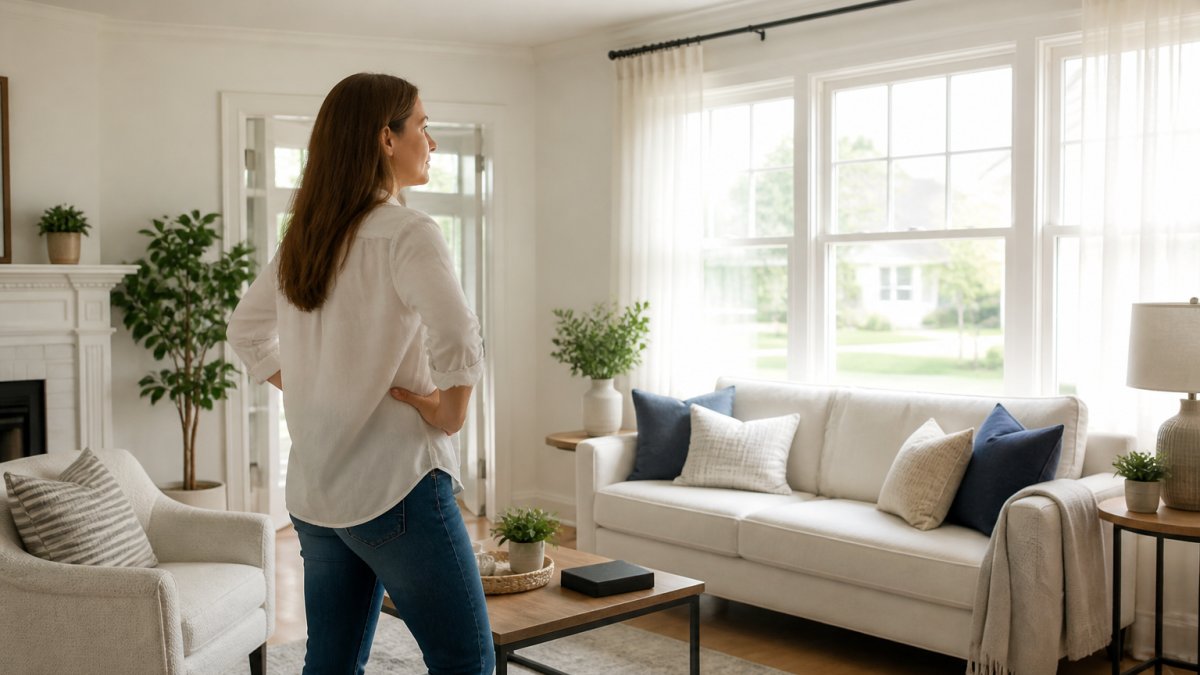
Start with deep cleaning. Professional cleaning costs $200-$500 but makes a dramatic difference. Clean windows, baseboards, and light fixtures. Remove clutter, personal photos, and excess furniture.
Make minor repairs. Fix leaky faucets, replace missing outlet covers, patch drywall holes, and repair loose door handles. These cost little but signal that you've maintained the home.
Paint is one of the highest-ROI improvements. Neutral colors (white, light gray, beige) appeal to more buyers than bold choices.
Curb appeal matters. Mow the lawn, trim bushes, add mulch to flower beds, and clean the front entrance. A welcoming exterior encourages buyers to look inside.
Consider staging, arranging furniture and décor to highlight the home's best features. You can stage yourself by removing excess furniture, adding fresh flowers, and ensuring rooms have clear purpose.
How to Market a House for Sale by Owner
Marketing determines whether buyers see your listing. Without an agent's MLS access, you'll need to use multiple channels.
List on major portals: Zillow, Redfin, Trulia, and Facebook Marketplace are free or low-cost. Take professional photos or hire a photographer ($150-$400 for 20-30 high-quality photos).
Write a compelling description. Highlight key features (updated kitchen, new roof, large backyard), recent improvements, and neighborhood appeal. Mention schools, commute times, and local amenities.
Use an MLS listing service. Services like Zillow Premier Agent, Realtor.com, or local flat-fee brokers list your home on MLS for $300-$800.
Host open houses. Schedule regular times (Saturday and Sunday afternoons are typical) when buyers can walk through without an appointment. This generates foot traffic and buyer interest.
Advertise locally. Post on community Facebook groups, neighborhood apps, and local classified sites. Tell your network, friends, family, and coworkers often know buyers.
Consider a real estate attorney or limited-service agent to handle specific tasks.
Handling Showings, Offers, and Negotiations
Schedule showings flexibly. Buyers have limited windows to view homes, so accommodating their availability increases interest.
During showings, step back and let buyers explore. Don't follow them room to room or volunteer information. Let the home speak for itself.
Screen buyers before showing. Ask for proof of funds or mortgage preapproval. This confirms they're serious and financially capable.
When an offer arrives, review it carefully. Offers include purchase price, contingencies (inspection, appraisal, financing), earnest money amount, and closing timeline.
Negotiate respectfully. Counters are normal. A buyer offers $240,000; you counter at $255,000; you might meet at $248,000. Keep emotions out of it.
Understand proof of funds. Serious buyers provide bank statements or preapproval letters showing they can close. This protects you from spending time with unqualified buyers.
Consider hiring a real estate attorney to review offers and advise on terms. Many FSBO sellers do this, it costs $500-$1,500 but prevents costly mistakes.
FSBO Paperwork Checklist and Closing Requirements
The paperwork is extensive. You'll need purchase and sale agreements, disclosure forms, inspection reports, appraisal reports, title search results, and closing statements.
Start with a purchase and sale agreement. This is the binding contract between you and the buyer.
Seller disclosures are mandatory in most states.
Title search and insurance protect the buyer (and you) by confirming ownership and identifying liens or claims on the property.
An appraisal is standard when the buyer is financing. The lender orders it to confirm the home's value justifies the loan.
An inspection is the buyer's right (if they have an inspection contingency). A professional inspector examines the home for defects and provides a detailed report.
Closing involves transferring the deed, collecting the down payment, paying off your mortgage, and settling final costs. The title company or closing attorney handles this.
Create a checklist of required documents:
- Purchase and sale agreement
- Seller disclosures
- Title search and insurance commitment
- Homeowners association documents (if applicable)
- Property survey (if available)
- Inspection report
- Appraisal report
- Proof of homeowners insurance
- Mortgage payoff letter from your lender
- Deed (prepared by closing attorney)
- Closing statement
- State and local tax documents
Missing documents delay closing. Stay organized and follow up regularly with the title company or attorney.
How Long Does It Take to Sell a House by Owner
Timeline varies widely depending on market conditions, price, and buyer demand. In a strong market, you might receive an offer within 2-4 weeks. In slower markets, it could take 2-3 months or longer.
Once you accept an offer, the closing process typically takes 30-45 days. This includes inspections (5-7 days), appraisal (7-10 days), title search and insurance (5-10 days), and final closing (1-2 days).
The total timeline from listing to closing is commonly 60-120 days. Some FSBO sales close faster if there are no contingencies or complications.
If you need to close quickly, because you're dealing with probate, facing foreclosure, or going through a divorce, the traditional FSBO route may not work. In those situations, selling to a local cash buyer like Tree House Properties, where we close in as little as 7 days, can be a viable option.
Selling a house without a realtor is achievable, but it demands time, knowledge, and attention to detail. Many homeowners successfully go FSBO and keep the commission savings.
If you're in the Cincinnati Tri-State area and exploring your options, whether you're selling FSBO, listing traditionally, or considering a faster exit, Tree House Properties is here to discuss what works best for your situation.
Frequently Asked Questions
What is it called when you sell a house without a realtor?
Selling a house without a realtor is called FSBO (For Sale by Owner). You handle all aspects of the sale yourself, from pricing and marketing to negotiating offers and managing paperwork. Some FSBO sellers use limited professional services like attorneys or flat-fee brokers for specific tasks while avoiding full-service agent commissions.
How do you price a house when selling it yourself?
Start with a comparative market analysis (CMA) by researching recently sold comparable properties in your area with similar size, condition, and location. Review active listings and expired listings to understand market demand. Consider getting a professional home appraisal for objectivity. Factor in your home's unique features, condition, and current market conditions. Price competitively but not below market value, overpricing delays sales, while underpricing leaves money on the table.
What paperwork do you need to sell a house without a realtor?
You'll need a purchase and sale agreement, seller disclosures (which vary by state and address property condition and known issues), proof of ownership, title documents, mortgage payoff information, and property tax records. Most states require specific disclosure forms. Consider having a real estate attorney review documents to ensure compliance with local laws. You'll also need to coordinate with a title company or closing attorney to handle escrow and final closing documents.
How much money can you actually save by selling without a realtor?
Traditional agent commissions typically run 5-6% of the sale price, split between listing and buyer agents. However, FSBO sales involve costs: marketing, photography, online listing fees, title insurance, closing costs, and potentially legal review. Net savings depend on your sale price, local market conditions, and which services you handle yourself versus outsource. A realistic comparison requires calculating total costs in your specific situation rather than assuming commission savings are pure profit.
Is it difficult to sell a home without a realtor?
FSBO selling is manageable but requires time, attention to detail, and comfort with negotiation. The main challenges are accurate pricing, legal compliance with state disclosure requirements, effective marketing to reach qualified buyers, screening serious offers from tire-kickers, and navigating the purchase agreement and closing process. Many FSBO sellers underestimate the workload or legal complexity. Success depends on your market knowledge, communication skills, and willingness to learn the process or hire professionals for specific tasks.
Can you sell a house without a realtor and still use a real estate attorney?
Yes. Many FSBO sellers hire a real estate attorney to review contracts, ensure compliance with state and local disclosure laws, and manage the closing process. An attorney can protect you from costly mistakes without the cost of a full-service agent. This hybrid approach is common for sellers who want to control the process and save on commissions while reducing legal risk. Attorney fees vary by location and complexity but are typically much lower than agent commissions.
What is the hardest part of selling a house by owner?
Pricing accurately is the hardest part for most FSBO sellers, too high and the house sits unsold, too low and you leave money on the table. The second major challenge is handling buyer inquiries and showings while managing emotions and safety concerns. Many FSBO sellers also struggle with legal requirements, offer negotiation, and understanding what contingencies like appraisal and inspection actually mean. Time commitment is another factor; FSBO selling takes 10-20 hours per week during active listing periods.
