
Selling a House Without Making Repairs: Your Complete Guide

Table of Contents
- What Selling a House Without Making Repairs Actually Means
- Your Options for Selling a House That Needs Major Repairs
- What to Fix Before Selling a House: The Repair Decision Framework
- Selling a House As-Is: Pros and Cons You Need to Know
- As-Is Home Sale Disclosure Requirements and Legal Obligations
- How Your Home's Condition Affects Sale Price and Timeline
- Making Your Decision: Cash Offer vs. Traditional Listing
- Conclusion
- Frequently Asked Questions
Last Updated: October 21, 2026
What Selling a House Without Making Repairs Actually Means
Selling a house without making repairs means listing and closing on your property in its current condition, without investing time or money into fixes beforehand, no roof, foundation, kitchen, or other repairs. It appeals to homeowners dealing with an inherited property, foreclosure, divorce, or an unmanageable rental, or who lack the capital to fix things first.
Homes in poor condition sell for less and take longer on the traditional market, but they can still sell. At Tree House Properties, we work with homeowners facing this decision; some list traditionally, others take a direct cash offer.
Your Options for Selling a House That Needs Major Repairs
When your home needs work, you have two main paths forward: sell to a cash buyer, or list on the open market and let buyers decide whether to negotiate repairs or accept the condition.
Cash Buyer or Real Estate Investor
A cash buyer, typically a real estate investor, purchases properties in any condition and closes quickly, no repairs, no inspections, no condition contingencies.
How it works:
- You contact the investor and describe your property
- They evaluate the condition and make a cash offer within 24 hours
- If you accept, closing happens in as little as 7 days
Pros of selling to a cash buyer:
- Fast closing (days instead of months)
- No repairs needed before or during the sale
- Certainty, the offer doesn't change based on inspection results
Cons of selling to a cash buyer:
- The offer is typically lower than traditional market value
- You're trading sale price for speed and convenience
- Limited negotiation once an offer is made
Traditional Open Market Sale
Listing on the open market means working with an agent, showing the home, and accepting offers from buyers interested in it as-is.
How it works:
- List the property with an agent
- Buyers view the home and submit offers
- Accepted offers typically include an inspection contingency
Pros of traditional listing:
- Potential for higher sale price (more buyers competing)
- Broader exposure to the market
- You can negotiate repair requests rather than accept them all
Cons of traditional listing:
- Real estate agent commission (typically 5-6% of sale price)
- Longer time on market (30-90+ days)
- Inspection contingencies often lead to repair negotiations
What to Fix Before Selling a House: The Repair Decision Framework
Not all repairs are equal. Score each issue on four dimensions before spending a dollar.
The four-question screen
For every defect, answer these in order. If an issue fails question 1 or 2, it usually needs attention regardless of cost.
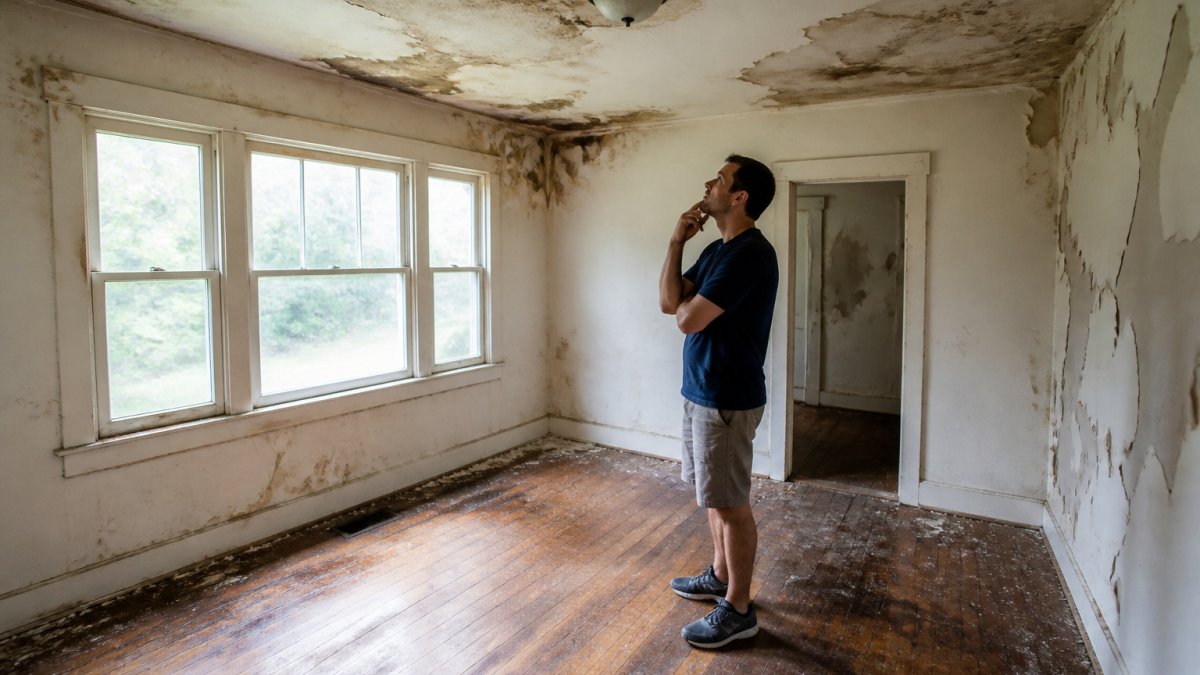
- Safety and habitability. Does the issue endanger occupants or make the home legally uninhabitable? Examples: exposed wiring, gas leaks, no heat in cold months, sewage backup, structural collapse risk, active roof leaks causing mold. Rarely skippable.
- Financing and insurability. Will the issue prevent a buyer from getting a loan or insurance? FHA, VA, USDA, and conventional loans each have condition standards, and insurers may decline or surcharge for roof age, knob-and-tube wiring, polybutylene plumbing, or prior water damage. If a buyer can't finance or insure the home, your pool shrinks to cash buyers, which changes your pricing.
- Inspection risk and negotiation leverage. How likely is an inspector to flag this, and what will it cost in credits or price reduction? A $400 GFCI fix is cheap insurance against a $3,000 credit request; a cosmetic issue buyers rarely negotiate hard is a candidate to skip.
- Cost versus resale value. If repair cost exceeds likely value add, skipping is rational, but only after questions 1 and 2 are satisfied.
A practical scoring approach
Score each issue 1-5 on safety, financing/insurability, inspection risk, and cost-to-value ratio (5 means cheap relative to price impact), then total:
- High total (roughly 15+): Address before listing, these block financing, create safety exposure, or generate outsized inspection credits.
- Mid total (roughly 9-14): Judgment call. Often best handled through pricing and disclosure rather than pre-sale repair.
- Low total (roughly 8 or below): Usually skip. Disclose and price accordingly.
Repairs that commonly clear the bar
- Electrical hazards and code violations, can block financing and create safety liability
- Active roof leaks damaging the interior, safety, structural, and insurance exposure
- Broken HVAC in cold climates, habitability and appraisal issues
Repairs that often fail the cost-to-value test
- Cosmetic updates (paint, flooring, fixtures) where the cost rarely returns at resale
- Outdated but functional systems (an older but working furnace or water heater)
- Minor roof wear without active leaks
The financing and insurability angle competitors miss
Condition issues affect who can buy, not just price. A home with a failing roof, active structural problems, or major system failures may be ineligible for FHA, VA, or USDA financing, and insurers can refuse to bind coverage, killing financed deals. Serious issues push your buyer pool toward cash investors, who price for risk and resale margin.
When to get a pre-listing inspection
A pre-listing inspection (a few hundred dollars) is worth it when you're unsure what's wrong, plan to list traditionally, or want to control the disclosure narrative. It converts unknowns into priced decisions.
The rule of thumb: fix what blocks a sale, creates genuine safety issues, or prevents a buyer from financing or insuring the home. Let buyers negotiate the rest through price.
Selling a House As-Is: Pros and Cons You Need to Know
Selling house without repairs as-is means the buyer accepts the property in its current condition, with no repairs before closing. "As-is" doesn't mean hiding problems, it means disclosing them and the buyer accepting them anyway.
Pros of selling as-is:
- No out-of-pocket repair costs
- Faster timeline (especially with cash buyers)
- No surprises during inspection negotiations
Cons of selling as-is:
- Lower sale price (buyers factor in repair costs)
- Fewer buyers willing to purchase damaged property
- Longer days on market if listing traditionally
The math is simple: selling as-is saves money upfront but costs money at closing. Whether that trade-off makes sense depends on your situation and timeline.
As-Is Home Sale Disclosure Requirements and Legal Obligations
Here's what most sellers get wrong: "as-is" is a pricing and negotiation posture, not a legal shield. In every state, selling as-is doesn't erase your duty to disclose known material defects. The as-is clause limits your obligation to repair; disclosure law governs what you must reveal. You can sell fully as-is and still be liable for a defect you knew about and concealed.
What "material defect" actually means
A material defect is generally a condition a reasonable buyer would consider important in deciding whether to buy or how much to pay, typically affecting health, safety, structural integrity, or value. Common examples include:
- Active water intrusion, roof leaks, or known mold
- Foundation movement, settling, or structural cracks
- Electrical problems, aluminum wiring, or unpermitted work
The federal overlay you cannot ignore
Even in states with limited disclosure, federal rules apply. For pre-1978 homes, the Lead-Based Paint Disclosure Rule (enforced by the EPA and HUD) requires disclosing known lead-based paint hazards and providing the EPA pamphlet Protect Your Family From Lead in Your Home before buyers are obligated under a contract, as-is sales included (the EPA). Separately, affirmatively misrepresenting a known latent defect, even verbally, can create liability under state consumer protection and fraud statutes regardless of the as-is label.
How state disclosure regimes differ
Disclosure obligations are set at the state level and fall into roughly three buckets:
- Mandatory written disclosure forms. Many states require a standardized property condition disclosure statement delivered before or at the time of offer, such as California's Transfer Disclosure Statement (TDS) and Texas's Seller's Disclosure Notice. The form typically asks about roof, foundation, water, electrical, plumbing, HVAC, pest, environmental, and legal issues.
- "Caveat emptor" states with narrower duties. A smaller number of states lean more heavily on buyer-beware principles, but even these generally prohibit active concealment and fraud, and some require disclosure of specific items (such as known lead paint or septic issues).
- Hybrid regimes. Many states combine a disclosure form with statutory carve-outs, amended-disclosure duties if a condition changes before closing, and specific rules for condos, HOAs, and new construction.
Because rules vary materially by state, confirm your state's specific form and timing requirements with a licensed real estate attorney or your agent before you list or accept an offer, don't rely on a generic checklist.
Timing and mechanics that trip up sellers
- Deliver early. Most disclosure forms must be delivered before the buyer is bound, or within a short window after acceptance. Late delivery can give the buyer a right to rescind.
- Update if things change. If you learn of a new defect after delivering the form, say, a leak appears during showings, many states require an amended disclosure.
- As-is clauses and disclosure coexist. The as-is clause typically waives the buyer's right to demand repairs; it does not waive your duty to disclose.
What happens if you get it wrong
Failing to disclose a known material defect can expose you to fraud, misrepresentation, or consumer protection claims, with remedies including rescission, repair damages, and sometimes statutory penalties or attorney's fees. The as-is label is no defense when the claim is that you knew and concealed.
Tree House Properties handles disclosure requirements transparently. No surprises, no hidden issues.
How Your Home's Condition Affects Sale Price and Timeline
The home's condition directly impacts two things: how much you'll receive and how long you'll wait.
Sale price impact:
Buyers subtract repair costs from what they'd pay for a perfect home. Major structural damage, environmental hazards, or safety issues create bigger discounts, and some buyers won't touch the property at all.
Timeline impact:
Cash buyers compress timelines to days at a lower price; traditional buyers pay more but require longer marketing.
Making Your Decision: Cash Offer vs. Traditional Listing
This decision boils down to your priorities: speed or price.
Choose a cash offer if:
- You need to close in days or weeks
- The home needs extensive repairs
- You're dealing with probate, foreclosure, or divorce stress
Choose traditional listing if:
- You have time to wait 60+ days
- The home is in decent condition with minor issues
- You want maximum exposure to potential buyers
The honest answer: most homeowners in difficult situations benefit from exploring both. Get a cash offer from Tree House Properties and a traditional listing estimate from an agent, compare net proceeds after commissions and carrying costs, then decide.
Conclusion
Selling house without repairs is possible, but it requires understanding your options and the trade-offs. Whether you list traditionally or accept a cash offer, the key is an informed decision.
Tree House Properties helps homeowners navigate this choice every day. We provide honest cash offers with no pressure, transparent communication throughout the process, and the flexibility to explore all paths forward, including traditional listing if that makes more sense for you.
Frequently Asked Questions
Can I sell my house without making repairs?
Yes. You can sell your house as-is through a cash buyer, real estate investor, or even on the open market with disclosure of known defects. However, selling without repairs typically results in a lower sale price than a renovated home. The trade-off is speed, convenience, and avoiding repair costs. Your best option depends on your timeline, financial situation, and local market conditions.
Do I still have to disclose problems when selling a house as-is?
Yes. Federal and state disclosure laws require you to inform buyers of known material defects, regardless of whether you're selling as-is. Material defects include structural issues, roof leaks, foundation cracks, electrical hazards, and plumbing problems. Failure to disclose can result in legal liability after closing. Cash buyers and investors often waive inspection contingencies, but disclosure is still mandatory.
Will buyers pay less for a house that needs repairs?
Significantly less. Buyers factor repair costs, carrying costs during renovation, and construction risk into their offers. The exact discount depends on repair scope, local market conditions, and the buyer's investment strategy.
What's the difference between selling to a cash buyer and listing traditionally?
A cash buyer closes quickly (7-14 days), requires no repairs, and pays no commissions or closing costs, but offers significantly less money. Traditional listing takes 30-90+ days, requires disclosure and inspection, and may trigger repair requests from buyers. Choose cash if you need speed and certainty; choose traditional listing if maximizing net proceeds is your priority and you can wait for the right buyer.